Monday, September 23, 2019

Rook v1.0 Adds Support for Ceph Nautilus, EdgeFS, and NFS Operator - InfoQ.com

Rook v1.0 Adds Support for Ceph Nautilus, EdgeFS, and NFS Operator - InfoQ.com


Rook v1.0 Adds Support for Ceph Nautilus, EdgeFS, and NFS Operator - InfoQ.com

Posted: 12 Aug 2019 12:00 AM PDT

Rook, a storage orchestrator for Kubernetes, has released version 1.0 for production-ready workloads that use file, block, and object storage in containers. Highlights of Rook 1.0 include support for storage providers through operators like Ceph Nautilus, EdgeFS, and NFS. For instance, when a pod requests an NFS file system, Rook can provision it without any manual intervention.

Rook was the first storage project accepted into the Cloud Native Computing Foundation (CNCF), and it helps storage administrators to automate everyday tasks like provisioning, configuration, disaster recovery, deployment, and upgrading storage providers. Rook turns a distributed file system into storage services that scale and heal automatically by leveraging the Kubernetes features with the operator pattern. When administrators use Rook with a storage provider like Ceph, they only have to worry about declaring the desired state of the cluster and the operator will be responsible for setting up and configuring the storage layer in the cluster.

As of today, Ceph is the only stable storage provider in Rook; support for most other storage providers is in alpha. The current list includes Cassandra, CockroachDB, Minio, and NFS. EdgeFS support has transitioned from alpha to beta in this 1.0 release, but Rook says it's ready for production use.

The Ceph operator in Rook now supports the latest major version of Ceph, Nautilius. Previous versions like Luminous and Mimic are still supported, and users can choose which version to run in the cluster. When a user wants to upgrade to a newer version, Rook can do it in a staggered fashion to ensure minimal disruptions. Rook has also published a simplified way to deploy Ceph into Kubernetes that removes error-prone manual configurations from the user. When a new node or device is added to the cluster, Rook will detect it automatically and rebalance data if needed.

Source: Rook's documentation site for Ceph storage

In version 1.0, Rook adds support to OpenStack Swift, a new storage protocol in EdgeFS that complements the existing support for AWS S3. Besides, Rook now also supports the iSCSI block storage extending the options for how a user can read and write the storage layer when using EdgeFS. The EdgeFS operator comes with a GUI that simplifies storage management, including a wizard to generate a custom resource definition (CRD) to provision EdgeFS storage. Also, each EdgeFS cluster has now built-in metrics for monitoring with Prometheus. And to increase the high-availability in the cluster, a user can define failure domains to balance read replicas making data as durable and available as possible.

Source: Rook's documentation site for EdgeFS storage

Moreover, Rook's NFS operator has now support for dynamic provisioning storage in Kubernetes. When a pod requests an NFS file system, Rook will provision and prepare it on demand without any manual intervention from the user. Before dynamic provisioning storage, a user had to manually provision storage volumes from a storage or cloud provider and then create persistent volume objects in Kubernetes. A user can automate this process with StorageClass objects, and Rook has support for it through the NFS CRD.

Lastly, Rook said that they're looking to continue improving the support for the existing storage providers, as well as invest further in the Rook framework to provide tools and resources to bring other storage systems into cloud-native environments. Rook's official site has been updated to present all the progress made after the initial release. Rook's full roadmap is available at GitHub, including future improvements and milestones to inspire any future engagement from the community.

“AWS, Azure or Google: Do the differences between cloud providers really matter? - Cloud Tech” plus 1 more

“AWS, Azure or Google: Do the differences between cloud providers really matter? - Cloud Tech” plus 1 more


AWS, Azure or Google: Do the differences between cloud providers really matter? - Cloud Tech

Posted: 23 Sep 2019 02:22 AM PDT

When evaluating public cloud providers,  it is easy to get hung up on the differences. AWS, Microsoft Azure, and Google Cloud each have their own terminology, pricing, service catalog, and purchasing variations. But do these differences ultimately matter? 

Compute options

Though we are able to align comparable products across AWS, Azure, and Google Cloud, there are of course differences between these offerings. In fact, with the number of products and services available today (we've counted 176 from AWS alone), comparing each is beyond the scope of this article.

For our purposes, we can compare what is still the core product for cloud service providers: compute. Compute products make up about two thirds of most companies' cloud bills, so the similarities and differences here will account for the core of most users' cloud experiences.

Here's a brief comparison of the compute option features across cloud providers:

Of course, if you plan to make heavy use of a particular service, such as Function-as-a-Service/serverless, you'll want to do a detailed comparison of those offerings on their own.

Pricing

That covers functionality. How do the prices compare? One way to do this is by selecting a particular resource type, finding comparable versions across the cloud providers, and comparing prices. Here's an example of a few instances' costs as of this writing (all are Linux OS):

For more accurate results, pull up each cloud provider's price list. Of course, not all instance types will be as easy to compare across providers – especially once you get outside the core compute offerings into options that are more variable, more configurable, and perhaps even charged differently (in fact, AWS and Google actually charge per second). 

Note that AWS and Azure list distinct prices for instance types with the Windows OS, while Google Cloud adds a per-core license charge, on top of the base instance cost.

The table above represents the default On Demand pricing options. However, each provider offers a variety of methods to reduce these base costs, which we'll look at in the Purchasing Options section.

Terminology 

At first glance, it may seem like the cloud providers each have a unique spread of offerings. But many of these products and services are quite similar once you get the names aligned. Here are a few examples:

Obviously, this is not a sign of substantive differences in offerings – and just goes to show that the providers are often more similar than it might appear at first glance. 

Purchasing options

Comparisons of the myriad purchasing options are worth several articles on their own, so I'll keep it high level here. These are the most commonly used – and discussed – options to lower costs from the listed On Demand prices for AWS, Microsoft Azure, and Google Cloud. 

Reservations

Each of the major cloud providers offers a way for customers to purchase compute capacity in advance in exchange for a discount: AWS Reserved Instances, Azure Reserved Virtual Machine Instances, and Google Committed Use discounts. There are a few interesting variations, for example, AWS offers an option to purchase "Convertible Reserved Instances", which allow reservations to be exchanged across families, operating systems, and instance sizes. On the other hand, Azure offers similar flexibility in their core Reserved VM option. Google Cloud's program is somewhat more flexible regarding resources, as customers must only select a number of vCPUs and memory, rather than a specific instance size and type. 

What about if you change your mind? AWS users have the option to resell their reservations on a marketplace if they decide they're no longer needed, while Azure users will pay a penalty to cancel, and Google users cannot cancel.

Spot and preemptible instances

Another discounting mechanism is the idea of spot instances in AWS, low-priority VMs in Azure, and preemptible VMs, as they're called on Google. These options allow users to purchase unused capacity for a steep discount. The cost of this discount is that these instances can be interrupted (or perhaps Azure puts it best with their "evicted" term) in favor of higher priority demand – i.e. someone who paid more. For this reason, this pricing structure is best used for fault-tolerant applications and short-lived processes, such as financial modeling, rendering, and testing. While there are variations in the exact mechanisms for purchasing and using these instance types across clouds, they have similar discount amounts and use cases.

Sustained use discounts

Google Cloud Platform offers another cost-saving option that doesn't have a direct equivalent in AWS or Azure: Sustained Use Discounts. This is an automatic, built-in discount for compute capacity, giving you a larger percentage off the more you run the instance. Be aware that the GCP prices listed can be somewhat misleading, as a sustained use discount is already built in, assuming full-month usage – but it is nice to see the cloud provider looking after its customers and requiring no extra cost or work for this discount.  

Contracts

A last sort of "purchasing option" is related to contract agreements. With all three major cloud providers, enterprise contracts are available. Typically, these are aimed at enterprise customers, and encourage large companies to commit to specific levels of usage and spend in exchange for an across-the-board discount – for example, AWS EDPs, Azure Enterprise Agreements. As these are not published options and will depend on the size of your infrastructure, your relationship with the cloud provider, etc., it's hard to say what impact this will have on your bill and how it will compare between clouds. 

The 'it' factor

There's also just the pure perception of the differences between cloud providers.

For instance, some may perceive Azure as a bit stodgy, while Google Cloud seems slick but perhaps less performant than AWS. Some appreciate AWS and Azure's enterprise support more and find Google Cloud lacking here, but this is changing as Google onboards more large customers and focuses on enterprise compatibility. 

There are also perceptions regarding ease of use, but actually, we find these to be most affected by the platform you're used to using. Ultimately, whatever you're most familiar with is going to be the easiest – and any can be learned.  

Do the differences really matter?

On some of the factors we went through above, the cloud providers do have variations. But on many variables, the providers and their offerings are so similar as to be equivalent. If there's a particular area that's especially important to your business (such as serverless, or integration with Microsoft applications), you may find that it becomes the deciding factor.

The fact of the matter is, you're likely to be using multiple clouds soon, if you're not already – so you will have access to the advantages of each provider. Additionally, applications and data are now more portable than ever due to containers.

So, prepare yourself and your environment for a multi-cloud reality. Build your applications to avoid vendor lock-in. Use cloud-agnostic tools where possible to take advantage of the benefits of abstraction layers

Even if you're only considering one cloud at the moment, these choices will benefit you in the long run. And remember: if your company is telling you to use a specific cloud provider, or an obscure requirement drives you to one in particular – don't worry. The differences don't matter that much. 

https://www.cybersecuritycloudexpo.com/wp-content/uploads/2018/09/cyber-security-world-series-1.pngInterested in hearing industry leaders discuss subjects like this and sharing their experiences and use-cases? Attend the Cyber Security & Cloud Expo World Series with upcoming events in Silicon Valley, London and Amsterdam to learn more.

Related Stories

Oracle exits OpenWorld 2019 with a lot riding on Autonomous Database, Oracle Cloud conversions, services pivot - ZDNet

Posted: 23 Sep 2019 03:00 AM PDT

Oracle's strategy revolves around popularizing its Autonomous Database, converting application and database customers to Oracle Cloud and using its own digital transformation as a case study for enterprises.

Divining Oracle's strategy following a week-long OpenWorld 2019 conference was easier said than done. There were multiple moving parts ranging from cloud infrastructure to applications to databases, a lot of CTO Larry Ellison quotes and quips and a skeptical group of analysts questioning the company's future. Oracle's OpenWorld conference came days after co-CEO Mark Hurd took a leave of absence for health reasons and a mixed quarterly report.

Exiting OpenWorld 2019, Oracle's strategy revolves around the following:

  • Grow its Autonomous Database franchise and move existing customers over to it. The benefits of automating security, updates, administration, and patching are clear. What's unclear is whether enterprises will move well beyond pilots of the Autonomous Database to production. Another wild card is this: Oracle was popularized by database administrators and now the company is trying to automate them.
  • Move Oracle over to Oracle Cloud Infrastructure to highlight the efficiency gains as well as be its own reference client for further adoption. NetSuite moved to Oracle Cloud and Oracle plans to improve its own margins and financial profile by moving to it.
  • Migrate existing ERP and application customers to software as a service. In the end, Oracle is likely to be more of a software as a service provider than a broad cloud stack. Oracle is touting its SaaS wins but appears to be positioning itself as a counterweight to Salesforce, which CTO Larry Ellison said is viewed as too pricey by customers.
  • Rebrand Oracle as a more customer-friendly provider. The company has moved to evangelize its software more internally and hopes that move helps sales. The initiative is called Oracle@OracleExperience. Doug Kehring, Executive Vice President, said that the company wants to be "our No. 1 reference." "The mission of Oracle@Oracle is to educate not just external users like our customers but also our internal audiences both for awareness (and help illustrate) the benefits are that can be achieved by leveraging the Oracle Cloud," he said.

Add it up, and CEO Safra Catz said Oracle is poised for revenue growth in the fiscal year ahead and this growth will be fueled by an integrated stack. In other words, Oracle is spinning the "suite always wins" mantra forward. 

Catz said:

We are, without a doubt, the only company that can provide a fully-integrated stack, which is something we've been known for in the on-premise world. And now we can provide a secure, performant and enterprise-grade stack all the way from the infrastructure through the database with autonomous database to the applications and embedded AI in those applications and in the analytics.

The Autonomous Database plan

Oracle's most interesting product is its Autonomous Database, which promises to automate a lot of hours spent on administration, patching, and security. To Ellison, Oracle's Autonomous Database is the headliner of the company, as well as the secret weapon to fend off threats from cloud providers, such as Amazon Web Services, Microsoft Azure (now an Oracle Cloud partner), Google Cloud Platform, and open-source alternatives.

What's unclear is whether the market is moving away from premium database offerings to good enough alternatives. In Oracle's financial analyst meeting transcript, the word "autonomous" was said 73 times.


Must read


Juan Loaiza, executive vice president of Oracle's mission-critical database technologies, said Autonomous Database could even recast the company's image. He said:

When we talk about autonomous database, we say the word database, but it's really the whole stack. Traditionally, customers built their whole thing. They bought servers, storage, network, OS, back-up, all that stuff, they put it together themselves. When a customer gets an autonomous database from us, they get the whole stack. So that increases our addressable market quite substantially. It's one thing.

Second, again, autonomous database is self-driving. That's nice. Oracle has not been known to be the easiest-to-use database in the world. That hasn't been our reputation. It's been known as the most mission-critical database in the world. Now actually, we're the simplest-to-use database in the world. That opens up new markets. So people like developers were scared to use Oracle before. Smaller businesses were scared to use Oracle before. Lines of businesses within companies were scared to use Oracle before. Data scientists were trying to do all this machine learning data science, were scared to use Oracle. Why? Because it was kind of complicated to use Oracle. Now with autonomous database, we're the -- we're literally the simplest database in the world.

Ellison said the Autonomous Database is one element of keeping customers on the database reservation. He also questioned whether customers were leaving Oracle databases. He said:

People will just move off the Oracle Database. Really? No one's moved off the Oracle Database. Name somebody. Go on to Amazon's website, and I'll show you names of companies who moved up the Oracle Database, you've never heard of those companies. Bob and Sarah's Pie Shop and Towing Company. Biloxi, Mississippi. Bob deceased. Sarah is still available.

He added that the Autonomous Database is pulling customers over. "We're seeing the Autonomous Database now of adoption rate beginning to spike. 500 new customers this past quarter, we'll have over 1,000 new customers in this quarter. It's now happening. Now it's happening. They'll take an existing data warehouse or a new data warehouse project, they'll move that over, they will -- they typically start slowly," said Ellison.

Analysts were skeptical about Oracle's database prospects and Autonomous Database uptake.

Stifel analyst Brad Reback said:

There is little question that Oracle's installed base is extremely secure, given the time, money, and operational risk of moving a legacy workload off of it. At the end of the day, there is no real ROI to that transition. However, as legacy workloads get replaced, we believe there are increasingly good alternatives to Oracle (hyperscale solutions, NoSQL, open source, etc.) and that the developer community (not many new SaaS apps are built on top of Oracle) and enterprise customers are increasingly moving in this direction.

Evercore ISI analyst Kirk Materne said the database upgrade cycle will take time. Materne said:

Oracle highlighted the ongoing innovation in the database such as AI/ML and a converged database. After speaking with some customers and partners, the question is how quickly can customers adopt this technology and at what cost? While it's hard to argue against the potential value associated with an autonomous database, we believe the shift towards autonomous and OCI within the Oracle customer base will take time.

Move to the cloud

The Industry Cloud: Why It's Next

The Industry Cloud: Why It's Next

The industry cloud has taken off and big businesses have been built by the likes of Veeva, Rootstock and others. Here's why the focus has allowed the industry to thrive even as giants like Salesforce, Oracle and SAP eye their turf.

Read More

Ellison said that if Oracle can move its database customers to the cloud along with its application installed base, there's an argument that the company will be the biggest cloud player. Ellison maintained that the stock market wasn't valuing Oracle's cloud potential.

Ellison said:

We think we're going to get virtually all of the Oracle databases, which is most of the world's data. It sounds crazy, right? Because if Oracle really holds on to its database franchise and moves it to the cloud, I'll ask you, it is the most interesting question of the day, so how big is Oracle? If we hold on to our database franchise, think about all the applications that are built on top of Oracle databases. Remember, we were way bigger than IBM and Microsoft combined in the database business. Still are, still are. If that all moves to them cloud and we get it, how big are we?

Oracle internal applications will be on the Oracle Cloud, the company argued its second-generation infrastructure is winning converts and the data center footprint is swelling. "We get a tremendous leverage in technology, things you see like machine learning and digital assistants or bots; and things you don't see, infrastructure updates, reliability, security going forward. The notion of technical debt in the Oracle Cloud has basically disappeared because we sit on top of that investment that we have going forward," said Ellison.


Must read


While Oracle talked about its infrastructure as a service, databases moving to the cloud and broader services, the main driver will be software as a service. Apps will drive Oracle forward, said analysts.

Oracle CEO Safra Catz said the company's move to its own cloud proves the point that its offerings are industrial strength. Ellison added that its infrastructure cloud will ultimately give its applications an edge over Salesforce, Workday, SAP, and other competitors.

And, yes, Ellison is still a wee bit obsessed with AWS, which has said it moved from Oracle to AWS

Ellison said:

Listen, AWS is the first mover. They have the idea, the rent -- to go ahead and rent computers. It was brilliant, and it's been enormously successful, and it's really -- they fundamentally have changed computing, but they really -- I mean they don't develop databases. They don't develop programming languages. We develop Java. We develop the Oracle Database. We develop Fusion applications. They don't do anything like that.

Analysts aren't yet sharing Oracle's enthusiasm for its cloud broadly speaking. However, Oppenheimer analyst Brian Schwartz said the growth of the SaaS business is critical to everything else.

We left impressed with the look, capabilities and integration of Oracle's SaaS applications and next-gen cloud infrastructure. To improve sentiment, we believe Oracle needs its SaaS business to grow faster. This development would convince investors that its database customers will migrate workloads and grow with Oracle since its enterprise SaaS business can pull through infrastructure demand.

Oracle@Oracle

Kehring, a 20-year veteran at Oracle, outlined how the company has retooled its business processes to take advantage of cloud computing. His talk at Oracle's analyst meeting highlighted the following points:

Oracle is moving from a product and licensing company to one that revolves around services and subscriptions.

ellison-and-o.png

The company has largely moved its internal applications all to Oracle's Cloud. We're sort of at that point of no return where we are nearly 100% having moved all of our applications to the cloud across ERP, supply chain, HCM, CX, and EPM. It's all up and running inside Oracle. It is the platform that's powering these new business processes," said Kehring.

Oracle is aiming to tell its own story internally as well as to customers. The catch is that Oracle will need some time to change its image with customers. 


Must read


Kehring explained:

Special Feature

Managing the Multicloud

Managing the Multicloud

A multicloud approach has been talked about for years within enterprises, but few companies have gone that direction. Now it's easier to go multicloud and AWS, Azure, and Google Cloud Platform all share customers. Here's a look at managing multiple cloud providers, how to play them off each other and what vendors and tools can help you manage multiple clouds.

Read More

We realized we're in a great position to share our story. We've always believed that we should, at Oracle, use our own technologies. And obviously, we've done that throughout our history. But more than that, we want to be our #1 reference. We want to be the best customer inside Oracle. We adopt first so that we can learn. We can learn and we can help the development team continuously improve. But the reality is our customers are demanding to understand, hey, how do you do it well? How do you do it effectively? How -- give me some insight into how this works, and that led to the Oracle@Oracle Experience.

Much of the Oracle@Oracle effort revolves around content that can evangelize Oracle Cloud to the sales field as well as customers to outline the returns such as efficiency, faster decision-making and the ability to be agile vs. the competition. Oracle's Kehring said the plan is to take Oracle@Oracle on the road beyond OpenWorld to open a dialogue with customers.

In a nutshell, Oracle@Oracle is part of a new branding effort for the company. At OpenWorld, Oracle tried out some branding with just an "O" and there was less red everywhere. Yes, Oracle was front and center, but less in your face about it.

Catz outlined why a new brand spin was necessary.

We feel that natural colors and -- seriously, natural colors sort of are much more approachable. Because the reality is, we have to move from just a product company to a service company. And when you're a service company, you have to have a much more approachable feel to you. And so we've really internalized that in every way.

Related stories:

Google Fi gets a cheaper “unlimited” plan, bundled cloud storage - Ars Technica

Google Fi gets a cheaper “unlimited” plan, bundled cloud storage - Ars Technica


Google Fi gets a cheaper “unlimited” plan, bundled cloud storage - Ars Technica

Posted: 17 Sep 2019 10:38 AM PDT

Google Fi gets a cheaper

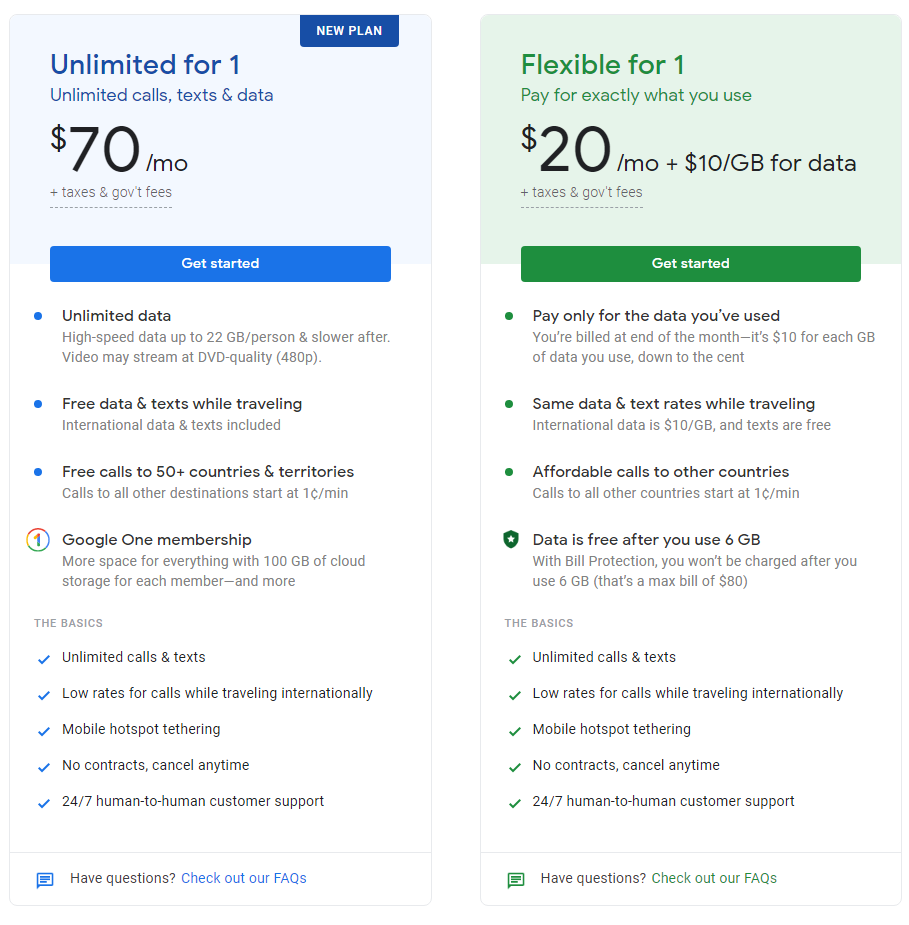
Google Fi, Google's MVNO (Mobile Virtual Network Operator) cellular service, is launching a second plan for users today. Besides the original pay-per-megabyte plan with unlimited calls and text, Google Fi is now launching a full blown "Unlimited" plan (with throttling after 22GB) for $70, and it comes with 100GB of cloud storage thanks to a bundled "Google One" membership.

In 2018, Google Fi introduced "Bill Protection," a tweak to the pay-per-MB plan that capped monthly bills at $80, making it an "unlimited" plan that throttled after 15GB. This new $70 plan is $10 cheaper and comes with more unthrottled data, and the bundled 100GB of Google One storage saves you another $2 a month. Google One is a monthly subscription service that gives you more storage for your Google account. Free Google accounts get 15GB across Gmail, Drive, and Google Photos, and Google One allows you to purchase anywhere from 100GB to 30TB of online storage.

The new Fi plan supports Google's family bundling, too. The unlimited plan is $70 a month for a single person, $60 a month each for two accounts ($120 total), $50 each for three accounts ($150 total) and $45 each for four accounts or more ( $180 total). With this plan, you'll get 22GB of unthrottled data and 100GB of storage per person, not shared across the whole family, which sounds like a good deal.

So there are two Fi plans now, the new "Unlimited" and the older "Flexible" plan:

The two Fi plans.
The two Fi plans.
Google Fi is a unique cellular service that can save you money depending on how you use your mobile device. As long as you pay for the data you use, (as pay-per-MB or with the new unlimited plan) the fees pretty much stop there. You can get multiple data-only SIM cards for free for your other devices, free hotspot capabilities, and international data in more than 135 countries, all at the normal rate. You get unlimited calls and texts, and your phone number lives in the cloud, so you get Google Voice-style features like call forwarding, online voicemail, Wi-Fi calling, and texts and calls on any device through the Google Hangouts app or website. There are no contracts, and you can quickly cancel and restart your Fi service at any time through the Fi app.

There are two classes of device support for Fi. Phones that are "Designed for Fi" (here's a compatibility list) let you combine service from Sprint, T-Mobile, and US Cellular into one big super network and get an always-on VPN. In the past year, Fi was expanded to work with non-Fi phones, but instead of switching between three services, you just get T-Mobile service with the Fi pricing and services intact.

The Fi Store is also offering 50% off Pixel 3s right now to "celebrate" the new unlimited plan. This also works out to be a clearance sale, since the Pixel 4 is right around the corner. 

“IaaS & PaaS Market Is Booming Worldwide | IBM, Aliyun, Google Cloud Platform - OnYourDesks” plus 1 more

“IaaS & PaaS Market Is Booming Worldwide | IBM, Aliyun, Google Cloud Platform - OnYourDesks” plus 1 more


IaaS & PaaS Market Is Booming Worldwide | IBM, Aliyun, Google Cloud Platform - OnYourDesks

Posted: 23 Sep 2019 12:14 AM PDT

A new research study from HTF MI with title Global IaaS & PaaS Market Size, Status and Forecast 2019-2025 provides an in-depth assessment of the IaaS & PaaS including key market trends, upcoming technologies, industry drivers, challenges, regulatory policies, key players company profiles and strategies. The research study provides forecasts for IaaS & PaaS market till 2025.

Access Sample Copy @: https://www.htfmarketreport.com/sample-report/1537390-global-iaas-paas-market-3

If you are involved in the IaaS & PaaS industry or intend to be, then this study will provide you comprehensive outlook. It's vital you keep your market knowledge up to date segmented by PACS, EMR, CPOE, RCM, Claims Management & Other, , Software as a Service (SaaS), Platform as a Service (PaaS) & Infrastructure as a Service (IaaS) and major players. If you have a different set of players/manufacturers according to geography or needs regional or country segmented reports we can provide customization according to your requirement.

This report focuses on the global IaaS & PaaS status, future forecast, growth opportunity, key market and key players. The study objectives are to present the IaaS & PaaS development in United States, Europe and China.

Buy this research report @ https://www.htfmarketreport.com/buy-now?format=1&report=1537390

The Study is segmented by following Product Type: , Software as a Service (SaaS), Platform as a Service (PaaS) & Infrastructure as a Service (IaaS)

Major applications/end-users industry are as follows: PACS, EMR, CPOE, RCM, Claims Management & Other

Geographically, this report is segmented into several key Regions such as United States, Europe, China, Japan, Southeast Asia, India & Central & South America, with production, consumption, revenue (million USD), and market share and growth rate of Global IaaS & PaaS in these regions, from 2012 to 2022 (forecast)

Early buyers will receive 10% customization on reports. Read Detailed Index of full Research Study at @ https://www.htfmarketreport.com/reports/1537390-global-iaas-paas-market-3

Major companies covered in the report: Microsoft, IBM, Aliyun, Google Cloud Platform, Salesforce, Rackspace, SAP, Oracle, Vmware & Alibaba

This study also contains company profiling, product picture and specifications, sales, market share and contact information of various international, regional, and local vendors of Global IaaS & PaaS Market. The market competition is constantly growing higher with the rise in technological innovation and M&A activities in the industry. Moreover, many local and regional vendors are offering specific application products for varied end-users. The new vendor entrants in the market are finding it hard to compete with the international vendors based on quality, reliability, and innovations in technology.

Some of the key questions answered in this report:
– Detailed Overview of Global IaaS & PaaS market helps deliver clients and businesses making strategies.
– Influential factors that are thriving demand and constraints in the market.
– What is the market concentration? Is it fragmented or highly concentrated?
– What trends, challenges and barriers will impact the development and sizing of IaaS & PaaS market?
– SWOT Analysis of each key players mentioned along with its company profile with the help of Porter's five forces tool mechanism to compliment the same.
– What growth momentum or acceleration market carries during the forecast period?
– Which region is going to tap highest market share in future?
– What Application/end-user category or Product Type may see incremental growth prospects?
– What would be the market share of key countries like United States, France, UK, Germany, Italy, Canada, Australia, Japan, China or Brazil etc.?
– What focused approach and constraints are holding the market tight?

Make inquiry before purchase @ https://www.htfmarketreport.com/enquiry-before-buy/1537390-global-iaas-paas-market-3

There are 15 Chapters to display the Global IaaS & PaaS market.
Chapter 1, About Executive Summary to describe Definition, Specifications and Classification of IaaS & PaaS market, Applications [PACS, EMR, CPOE, RCM, Claims Management & Other], Market Segment by Regions;
Chapter 2, to analyze objective of the study.
Chapter 3, to display Research methodology and techniques.
Chapter 4 and 5 , to show the Overall Market Analysis, segmentation analysis, characteristics;
Chapter 6 and 7, to show the Market size, share and forecast; Five forces analysis (bargaining Power of buyers/suppliers), Threats to new entrants and market condition;
Chapter 8 and 9, to show analysis by regional segmentation[United States, Europe, China, Japan, Southeast Asia, India & Central & South America ], comparison, leading countries and opportunities; Regional Marketing Type Analysis, Supply Chain Analysis
Chapter 10, focus on identifying the key industry influencer's, overview of decision framework accumulated through Industry experts and strategic decision makers;
Chapter 11 and 12, Market Trend Analysis, Drivers, Challenges by consumer behavior, Marketing Channels and demand & supply.
Chapter 13 and 14, describe about the vendor landscape (classification and Market Positioning)
Chapter 15, deals with Global IaaS & PaaS Market sales channel, distributors, traders, dealers, Research Findings and Conclusion, appendix and data source.

Thanks for reading this article; you can also get individual chapter wise section or region wise report version like North America, Europe or Asia.

About Author:
HTF Market Report is a wholly owned brand of HTF market Intelligence Consulting Private Limited. HTF Market Report global research and market intelligence consulting organization is uniquely positioned to not only identify growth opportunities but to also empower and inspire you to create visionary growth strategies for futures, enabled by our extraordinary depth and breadth of thought leadership, research, tools, events and experience that assist you for making goals into a reality. Our understanding of the interplay between industry convergence, Mega Trends, technologies and market trends provides our clients with new business models and expansion opportunities. We are focused on identifying the "Accurate Forecast" in every industry we cover so our clients can reap the benefits of being early market entrants and can accomplish their "Goals & Objectives".


Contact US :
Craig Francis (PR & Marketing Manager)
HTF Market Intelligence Consulting Private Limited
Unit No. 429, Parsonage Road Edison, NJ
New Jersey USA – 08837
Phone: +1 (206) 317 1218
sales@htfmarketreport.com

Connect with us at LinkedIn | Facebook | Twitter | Google+

Global Cloud Computing for Business Operations Market Analysis 2019, Application, Size, Share, Growth, Trends, Verticals, Regions and Forecast till 2024 - Stock Market Pioneer

Posted: 23 Sep 2019 09:23 PM PDT

The report is a complete handbook encompassing major cues on innovative growth strategies instrumented by market forerunners and their eventual implications on holistic growth pattern in Global Cloud Computing for Business Operations Market. A thorough analytical review of these winning strategies by market players ensures error-free growth spike, thereby securing their lead amidst staggering competition in Global Cloud Computing for Business Operations Market.

Also to further deliver minutest growth influencing detail in global market. A section on dynamic market segmentation is also included in the report, on the basis of which readers are presented with detailed overview of core segments such as type and application, besides a run-down on geographical presence. By segmentation analysis global market highlights details on deployment as well as on end-user applications besides regional diversification.

Access the PDF sample of the report @ https://www.orbisresearch.com/contacts/request-sample/3246677

Cloud computing is a internet-based computing where central remote servers maintain all the data and applications. Cloud computing allow business operators to rent physical infrastructure from a third party provider(cloud service provider).

According to this study, over the next five years the Cloud Computing for Business Operations market will register a xx% CAGR in terms of revenue, the global market size will reach US$ xx million by 2024, from US$ xx million in 2019. In particular, this report presents the global revenue market share of key companies in Cloud Computing for Business Operations business, shared in Chapter 3.

This report presents a comprehensive overview, market shares and growth opportunities of Cloud Computing for Business Operations market by product type, application, key companies and key regions.

This study considers the Cloud Computing for Business Operations value generated from the sales of the following segments:

Segmentation by product type: breakdown data from 2014 to 2019 in Section 2.3; and forecast to 2024 in section 10.7.

Infrastructure as a Service (IaaS)

Platform as a Service (PaaS)

Recovery as a Service (RaaS)

Segmentation by application: breakdown data from 2014 to 2019, in Section 2.4; and forecast to 2024 in section 10.8.

Private Cloud

Hybrid Cloud

Others

This report also splits the market by region: Breakdown data in Chapter 4, 5, 6, 7 and 8.

Americas

United States

Canada

Mexico

Brazil

APAC

China

Japan

Korea

Southeast Asia

India

Australia

Europe

Germany

France

UK

Italy

Russia

Spain

Middle East & Africa

Egypt

South Africa

Israel

Turkey

GCC Countries

The report also presents the market competition landscape and a corresponding detailed analysis of the major vendor/manufacturers in the market. The key manufacturers covered in this report: Breakdown data in in Chapter 3.

Amazon Web Services

Microsoft Azure

Google Cloud Platform

IBM Cloud

Red Hat

SAP Cloud Platform

Kamatera

VMware

Oracle Cloud

Salesforce Cloud

Cisco Systems

Verizon Cloud

HPE Cloud

ServiceNow

Alibaba Cloud

DigitalOcean

CenturyLink

Workday

CloudSigma

Adobe Cloud

In addition, this report discusses the key drivers influencing market growth, opportunities, the challenges and the risks faced by key players and the market as a whole. It also analyzes key emerging trends and their impact on present and future development.

Research objectives

To study and analyze the global Cloud Computing for Business Operations market size by key regions/countries, product type and application, history data from 2014 to 2018, and forecast to 2024.

To understand the structure of Cloud Computing for Business Operations market by identifying its various subsegments.

Focuses on the key global Cloud Computing for Business Operations players, to define, describe and analyze the value, market share, market competition landscape, SWOT analysis and development plans in next few years.

To analyze the Cloud Computing for Business Operations with respect to individual growth trends, future prospects, and their contribution to the total market.

To share detailed information about the key factors influencing the growth of the market (growth potential, opportunities, drivers, industry-specific challenges and risks).

To project the size of Cloud Computing for Business Operations submarkets, with respect to key regions (along with their respective key countries).

To analyze competitive developments such as expansions, agreements, new product launches and acquisitions in the market.

To strategically profile the key players and comprehensively analyze their growth strategies.

Browse the full report @ https://www.orbisresearch.com/reports/index/global-cloud-computing-for-business-operations-market-growth-status-and-outlook-2019-2024

Table of Contents

2019-2024 Global Cloud Computing for Business Operations Market Report (Status and Outlook)

1 Scope of the Report

1.1 Market Introduction

1.2 Research Objectives

1.3 Years Considered

1.4 Market Research Methodology

1.5 Economic Indicators

1.6 Currency Considered

2 Executive Summary

2.1 World Market Overview

2.1.1 Global Cloud Computing for Business Operations Market Size 2014-2024

2.1.2 Cloud Computing for Business Operations Market Size CAGR by Region

2.2 Cloud Computing for Business Operations Segment by Type

2.2.1 Infrastructure as a Service (IaaS)

2.2.2 Platform as a Service (PaaS)

2.2.3 Software as a Service (SaaS)

2.2.4 Recovery as a Service (RaaS)

2.3 Cloud Computing for Business Operations Market Size by Type

2.3.1 Global Cloud Computing for Business Operations Market Size Market Share by Type (2014-2019)

2.3.2 Global Cloud Computing for Business Operations Market Size Growth Rate by Type (2014-2019)

2.4 Cloud Computing for Business Operations Segment by Application

2.4.1 Private Cloud

2.4.2 Hybrid Cloud

2.4.3 Others

2.5 Cloud Computing for Business Operations Market Size by Application

2.5.1 Global Cloud Computing for Business Operations Market Size Market Share by Application (2014-2019)

2.5.2 Global Cloud Computing for Business Operations Market Size Growth Rate by Application (2014-2019)

3 Global Cloud Computing for Business Operations by Players

3.1 Global Cloud Computing for Business Operations Market Size Market Share by Players

3.1.1 Global Cloud Computing for Business Operations Market Size by Players (2017-2019)

3.1.2 Global Cloud Computing for Business Operations Market Size Market Share by Players (2017-2019)

3.2 Global Cloud Computing for Business Operations Key Players Head office and Products Offered

3.3 Market Concentration Rate Analysis

3.3.1 Competition Landscape Analysis

3.3.2 Concentration Ratio (CR3, CR5 and CR10) (2017-2019)

3.4 New Products and Potential Entrants

3.5 Mergers & Acquisitions, Expansion

4 Cloud Computing for Business Operations by Regions

4.1 Cloud Computing for Business Operations Market Size by Regions

4.2 Americas Cloud Computing for Business Operations Market Size Growth

4.3 APAC Cloud Computing for Business Operations Market Size Growth

4.4 Europe Cloud Computing for Business Operations Market Size Growth

4.5 Middle East & Africa Cloud Computing for Business Operations Market Size Growth

5 Americas

5.1 Americas Cloud Computing for Business Operations Market Size by Countries

5.2 Americas Cloud Computing for Business Operations Market Size by Type

5.3 Americas Cloud Computing for Business Operations Market Size by Application

5.4 United States

5.5 Canada

5.6 Mexico

5.7 Key Economic Indicators of Few Americas Countries

6 APAC

6.1 APAC Cloud Computing for Business Operations Market Size by Countries

6.2 APAC Cloud Computing for Business Operations Market Size by Type

6.3 APAC Cloud Computing for Business Operations Market Size by Application

6.4 China

6.5 Japan

6.6 Korea

6.7 Southeast Asia

6.8 India

6.9 Australia

6.10 Key Economic Indicators of Few APAC Countries

7 Europe

7.1 Europe Cloud Computing for Business Operations by Countries

7.2 Europe Cloud Computing for Business Operations Market Size by Type

7.3 Europe Cloud Computing for Business Operations Market Size by Application

7.4 Germany

7.5 France

7.6 UK

7.7 Italy

7.8 Russia

7.9 Spain

7.10 Key Economic Indicators of Few Europe Countries

8 Middle East & Africa

8.1 Middle East & Africa Cloud Computing for Business Operations by Countries

8.2 Middle East & Africa Cloud Computing for Business Operations Market Size by Type

8.3 Middle East & Africa Cloud Computing for Business Operations Market Size by Application

8.4 Egypt

8.5 South Africa

8.6 Israel

8.7 Turkey

8.8 GCC Countries

9 Market Drivers, Challenges and Trends

9.1 Market Drivers and Impact

9.1.1 Growing Demand from Key Regions

9.1.2 Growing Demand from Key Applications and Potential Industries

9.2 Market Challenges and Impact

9.3 Market Trends

10 Global Cloud Computing for Business Operations Market Forecast

10.1 Global Cloud Computing for Business Operations Market Size Forecast (2019-2024)

10.2 Global Cloud Computing for Business Operations Forecast by Regions

10.2.1 Global Cloud Computing for Business Operations Forecast by Regions (2019-2024)

10.2.2 Americas Market Forecast

10.2.3 APAC Market Forecast

10.2.4 Europe Market Forecast

10.2.5 Middle East & Africa Market Forecast

10.3 Americas Forecast by Countries

10.3.1 United States Market Forecast

10.3.2 Canada Market Forecast

10.3.3 Mexico Market Forecast

10.3.4 Brazil Market Forecast

10.4 APAC Forecast by Countries

10.4.1 China Market Forecast

10.4.2 Japan Market Forecast

10.4.3 Korea Market Forecast

10.4.4 Southeast Asia Market Forecast

10.4.5 India Market Forecast

10.4.6 Australia Market Forecast

10.5 Europe Forecast by Countries

10.5.1 Germany Market Forecast

10.5.2 France Market Forecast

10.5.3 UK Market Forecast

10.5.4 Italy Market Forecast

10.5.5 Russia Market Forecast

10.5.6 Spain Market Forecast

10.6 Middle East & Africa Forecast by Countries

10.6.1 Egypt Market Forecast

10.6.2 South Africa Market Forecast

10.6.3 Israel Market Forecast

10.6.4 Turkey Market Forecast

10.6.5 GCC Countries Market Forecast

10.7 Global Cloud Computing for Business Operations Forecast by Type

10.8 Global Cloud Computing for Business Operations Forecast by Application

11 Key Players Analysis

11.1 Amazon Web Services

11.1.1 Company Details

11.1.2 Cloud Computing for Business Operations Product Offered

11.1.3 Amazon Web Services Cloud Computing for Business Operations Revenue, Gross Margin and Market Share (2017-2019)

11.1.4 Main Business Overview

11.1.5 Amazon Web Services News

11.2 Microsoft Azure

11.2.1 Company Details

11.2.2 Cloud Computing for Business Operations Product Offered

11.2.3 Microsoft Azure Cloud Computing for Business Operations Revenue, Gross Margin and Market Share (2017-2019)

11.2.4 Main Business Overview

11.2.5 Microsoft Azure News

11.3 Google Cloud Platform

11.3.1 Company Details

11.3.2 Cloud Computing for Business Operations Product Offered

11.3.3 Google Cloud Platform Cloud Computing for Business Operations Revenue, Gross Margin and Market Share (2017-2019)

11.3.4 Main Business Overview

11.3.5 Google Cloud Platform News

11.4 IBM Cloud

11.4.1 Company Details

11.4.2 Cloud Computing for Business Operations Product Offered

11.4.3 IBM Cloud Cloud Computing for Business Operations Revenue, Gross Margin and Market Share (2017-2019)

11.4.4 Main Business Overview

11.4.5 IBM Cloud News

11.5 Red Hat

11.5.1 Company Details

11.5.2 Cloud Computing for Business Operations Product Offered

11.5.3 Red Hat  Cloud Computing for Business Operations Revenue, Gross Margin and Market Share (2017-2019)

11.5.4 Main Business Overview

11.5.5 Red Hat  News

11.6 SAP Cloud Platform

11.6.1 Company Details

11.6.2 Cloud Computing for Business Operations Product Offered

11.6.3 SAP Cloud Platform Cloud Computing for Business Operations Revenue, Gross Margin and Market Share (2017-2019)

11.6.4 Main Business Overview

11.6.5 SAP Cloud Platform News

11.7 Kamatera

11.7.1 Company Details

11.7.2 Cloud Computing for Business Operations Product Offered

11.7.3 Kamatera Cloud Computing for Business Operations Revenue, Gross Margin and Market Share (2017-2019)

11.7.4 Main Business Overview

11.7.5 Kamatera News

11.8 VMware

11.8.1 Company Details

11.8.2 Cloud Computing for Business Operations Product Offered

11.8.3 VMware Cloud Computing for Business Operations Revenue, Gross Margin and Market Share (2017-2019)

11.8.4 Main Business Overview

11.8.5 VMware News

11.9 Oracle Cloud

11.9.1 Company Details

11.9.2 Cloud Computing for Business Operations Product Offered

11.9.3 Oracle Cloud Cloud Computing for Business Operations Revenue, Gross Margin and Market Share (2017-2019)

11.9.4 Main Business Overview

11.9.5 Oracle Cloud News

11.10 Salesforce Cloud

11.10.1 Company Details

11.10.2 Cloud Computing for Business Operations Product Offered

11.10.3 Salesforce Cloud Cloud Computing for Business Operations Revenue, Gross Margin and Market Share (2017-2019)

11.10.4 Main Business Overview

11.10.5 Salesforce Cloud News

11.11 Cisco Systems

11.12 Verizon Cloud

11.13 HPE Cloud

11.14 ServiceNow

11.15 Alibaba Cloud

11.16 DigitalOcean

11.17 CenturyLink

11.18 Workday

11.19 CloudSigma

11.20 Adobe Cloud

12 Research Findings and Conclusion

Direct purchase the report @ https://www.orbisresearch.com/contact/purchase-single-user/3246677

About Us:

Orbis Research (orbisresearch.com) is a single point aid for all your market research requirements. We have vast database of reports from the leading publishers and authors across the globe. We specialize in delivering customized reports as per the requirements of our clients. We have complete information about our publishers and hence are sure about the accuracy of the industries and verticals of their specialization. This helps our clients to map their needs and we produce the perfect required market research study for our clients.

Contact Us:

Hector Costello
Senior Manager – Client Engagements
4144N Central Expressway,
Suite 600, Dallas,
Texas – 75204, U.S.A.
Phone No.: +1 (972)-362-8199; +91 895 659 5155

“Google Changing Privacy Protections for Assistant, Plans to Auto-Delete More of Your Audio Data - Gizmodo” plus 2 more

“Google Changing Privacy Protections for Assistant, Plans to Auto-Delete More of Your Audio Data - Gizmodo” plus 2 more


Google Changing Privacy Protections for Assistant, Plans to Auto-Delete More of Your Audio Data - Gizmodo

Posted: 23 Sep 2019 07:30 AM PDT

Photo: Alex Cranz (Gizmodo)

In recent months, it became clear that Google, Apple, and Amazon were all guilty of having humans review audio recordings collected by digital assistants. Today, Google's trying to mitigate some of the backlash by updating and clarifying its policies on what it does with your audio data.

In July, a Google subcontractor leaked over a thousand Google Assistant recordings to VRT, a Belgian news organization. While it wasn't exactly a secret that Google employed humans to review and transcribe recordings, the leak resurfaced concerns about accidental recordings in which the "Hey Google" wake word wasn't used, and how securely Google stores sensitive audio data. In response, Google spun the leak as a security breach and defended human review as a necessary part of improving speech recognition across multiple languages. It then paused human transcription globally as it reviewed its policies.

Advertisement

The first change Google's making directly deals with human review. In a blog, it noted that customers were always able to opt-in or -out of its Voice & Audio Activity (VAA) setting during Assistant setup. However, it wasn't necessarily clear from the previous language in its terms of service that humans would be reviewing audio recordings. To fix that, Google says it will highlight the fact "that when you turn on VAA, human reviewers may listen to your audio snippets to help improve speech technology." Existing users will also have the option to review their VAA and reconfirm whether they still want to participate.

Google also said it plans to add an option to adjust how sensitive a Google Assistant device is to the "Hey Google" command. Meaning, you could make it stricter to reduce accidental recordings, or temporarily more relaxed in a noisy setting.

Also on the agenda is automatically deleting more data and beefing up privacy protections for the transcription process—though Google didn't give much detail on these fronts. With regard to privacy, Google merely reiterated that audio recordings were never associated with individual accounts and that it would add "an extra layer of privacy filters." Google did not immediately respond to Gizmodo's request for comment to clarify what that actually means.

Advertisement

As for data deletion, it said it would improve its process of identifying unintentional recordings. More concretely, Google noted it would update its policy "later this year" so that the audio data of VAA participants would be automatically deleted after a few months.

On the surface, these are all good things—especially the bit where Google says it will highlight human review in its VAA opt-in process. It bears reminding that right now, human review is still a necessary part of improving voice and speech recognition. Even with improved or stricter auto delete measures, you can't be 100 percent sure that a digital assistant won't accidentally record a conversation and send it off into the cloud for some underpaid contractor to listen to. If you want zero chance of that, you're better off not opting into VAA at all, or eschewing voice assistants altogether.

Advertisement

Google Fi gets a cheaper “unlimited” plan, bundled cloud storage - Ars Technica

Posted: 17 Sep 2019 10:38 AM PDT

Google Fi gets a cheaper

Google Fi, Google's MVNO (Mobile Virtual Network Operator) cellular service, is launching a second plan for users today. Besides the original pay-per-megabyte plan with unlimited calls and text, Google Fi is now launching a full blown "Unlimited" plan (with throttling after 22GB) for $70, and it comes with 100GB of cloud storage thanks to a bundled "Google One" membership.

In 2018, Google Fi introduced "Bill Protection," a tweak to the pay-per-MB plan that capped monthly bills at $80, making it an "unlimited" plan that throttled after 15GB. This new $70 plan is $10 cheaper and comes with more unthrottled data, and the bundled 100GB of Google One storage saves you another $2 a month. Google One is a monthly subscription service that gives you more storage for your Google account. Free Google accounts get 15GB across Gmail, Drive, and Google Photos, and Google One allows you to purchase anywhere from 100GB to 30TB of online storage.

The new Fi plan supports Google's family bundling, too. The unlimited plan is $70 a month for a single person, $60 a month each for two accounts ($120 total), $50 each for three accounts ($150 total) and $45 each for four accounts or more ( $180 total). With this plan, you'll get 22GB of unthrottled data and 100GB of storage per person, not shared across the whole family, which sounds like a good deal.

So there are two Fi plans now, the new "Unlimited" and the older "Flexible" plan:

The two Fi plans.
The two Fi plans.
Google Fi is a unique cellular service that can save you money depending on how you use your mobile device. As long as you pay for the data you use, (as pay-per-MB or with the new unlimited plan) the fees pretty much stop there. You can get multiple data-only SIM cards for free for your other devices, free hotspot capabilities, and international data in more than 135 countries, all at the normal rate. You get unlimited calls and texts, and your phone number lives in the cloud, so you get Google Voice-style features like call forwarding, online voicemail, Wi-Fi calling, and texts and calls on any device through the Google Hangouts app or website. There are no contracts, and you can quickly cancel and restart your Fi service at any time through the Fi app.

There are two classes of device support for Fi. Phones that are "Designed for Fi" (here's a compatibility list) let you combine service from Sprint, T-Mobile, and US Cellular into one big super network and get an always-on VPN. In the past year, Fi was expanded to work with non-Fi phones, but instead of switching between three services, you just get T-Mobile service with the Fi pricing and services intact.

The Fi Store is also offering 50% off Pixel 3s right now to "celebrate" the new unlimited plan. This also works out to be a clearance sale, since the Pixel 4 is right around the corner. 

Google Fi Launches A New Unlimited Plan - Ubergizmo

Posted: 23 Sep 2019 03:59 AM PDT

If unlimited mobile plans appeal to you, then you might be thrilled to learn that Google has announced a new unlimited plan for its Google Fi MVNO service. Given that this is Google, it won't just be a standard unlimited plan and it will actually come with the addition of a Google One subscription.
Advertising

According to Google, "The new Unlimited plan gives you unlimited data, calls and texts at a low cost for multiple members of your family. You'll also be covered when you connect with friends and family at home or abroad, as our plan includes free international calls from the U.S. to 50 countries and territories, and unlimited data and texting abroad in 200 destinations at no extra charge (and with no setup required). "

Previously, one of the unique selling points of Google Fi is the pay-as-you-use system, where you only pay for whatever data you consume. However, if you're a heavy data user, then this unlimited plan could be of interest to you. The new plan will be priced at $70 for a single line, but will decrease in cost the more lines you use. It will also come with 100GB of Google One cloud storage for your backups.

That being said, it should be pointed out that while it is unlimited, there is a bit of a catch. According to Google, speeds will be throttled after 22GB of usage (per month), and that video streaming quality could be downgraded to 480p. However, if you're still fine with all of this, then head on over to Google Fi's website for the details.

Filed in Cellphones. Read more about . Source: blog.google